
Dr. Richard Armstrong Pearse

The office of Dr. R.A. Pearse immediately east of the Nichols home that became the Pearse Hospital. An accompanying news article notes its construction in 1910.
Dr. Richard Armstrong Pearse (1875-1945) was born in New York where he excelled in athletics. After graduating college, he attended medical school in Denver, Colorado and graduated in 1900. He eventually moved to Ogden to practice medicine but then met Venna Nichols, the youngest daughter of Alvin and Virginia Ann Charlotte Wright Nichols, and a citizen of Brigham City. Dr. Pearse decided to move to Brigham City to practice medicine and opened practice, was baptized into the LDS church, and married Venna in 1903. He initially set up practice in the “Knudson Block” (The Union Block, later home of JC Penney’s) on the second floor.
Dr Pearse opened “Brigham City General Hospital” in 1906 in the “brick residence of John Anderson on 7th South and Main (this is the hospital where my great, great grandfather John H. Bott passed away). In 1913, he opened the “Pearse and Brown Hospital” with Dr. Archie Lee Brown, Sr. in a home that they leased from Lars Olsen on 400 W and 100 S.
From 1916-1920, Drs. Pearse and A.D. Cooley opened a hospital on 400 South in the old home of Abraham Hunsaker. In the 1920s, Dr. Pearse opened his own hospital on the corner of 200 W and Forest in the home of his mother-in-law and eventually built his family home east of the hospital.
Dr. Pearse was a beloved doctor in Brigham City and at least one person still alive in Brigham City was delivered by him. He was very involved in public health and with sports at Box Elder High School. He was known for his lessons in church and also wrote one of the first clinical descriptions of tularemia in a 1911 article titled “Insect Bites” that was published in Northwest Medicine. Dr. Pearse was noted to have successfully treated the disease and significantly contributing to its recognition. https://jamanetwork.com/jour.../jama/article-abstract/263132. He was friends with Dr. Charles Mayo (founder of the Mayo Clinic) who visited his home in Brigham City.
Dr. Pearse was instrumental in treating the flu outbreak in Brigham City (1917-1920) and also a spinal meningitis outbreak (mid-1920s), with the later disease taking the life of his son. https://brighamcityhistory.org/.../community-health-1900.../
Dr. Pearse was so legendary that a playwright at USU wrote a play based on his life and experiences. The playwright was the son of Dr. Pearse’s nurse, Elizabeth Ann Cheney Lewis, and was performed at USU. Elizabeth Cheney Lewis later bought the hospital and turned it into the apartments that are still in use.
All information is for educational, nonprofit, and noncommercial purposes only.
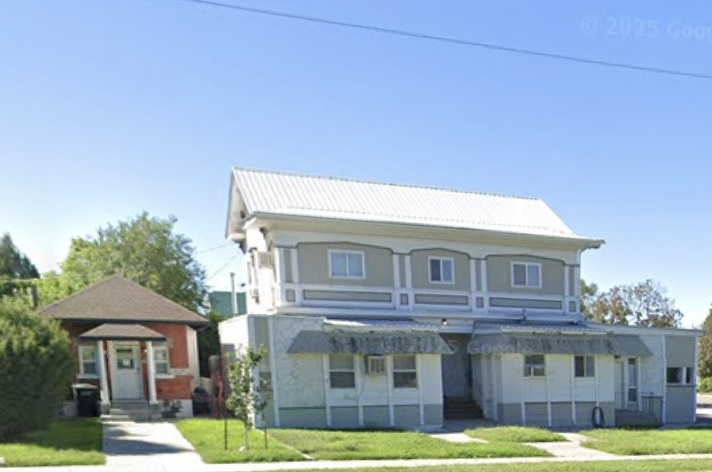
Recent photo of Dr. Pearse's office just east of his former hospital on Forest Street

News article of 3/24/1910

Dr. Pearse's coming to Brigham City BENJ 3/19/1903

Building on left is the "Knudson Block." Dr. Pearse initially practiced on the second floor

The home on the left was the "Brigham City General Hospital," opened by Dr. Pearse in 1906. Formerly the home of John Anderson. 700 South and Main Street

"Brigham City General Hospital" as a home.

Later photo of "Brigham City General Hospital" on the left.

Former home of Abraham Hunsaker on 400 S Main Street. Used as a hospital for Drs. Pearse and Cooley from 1916-1920.

The home of Alvin and Virginia Ann Charlotte Wright (Dr. Pearse's in-laws) prior to becoming a hospital. 200 W and Forest Street (still standing)

"Pearse Hospital" on 200 W and Forest.

When the hospital was converted to apartments and known as "The Castle"
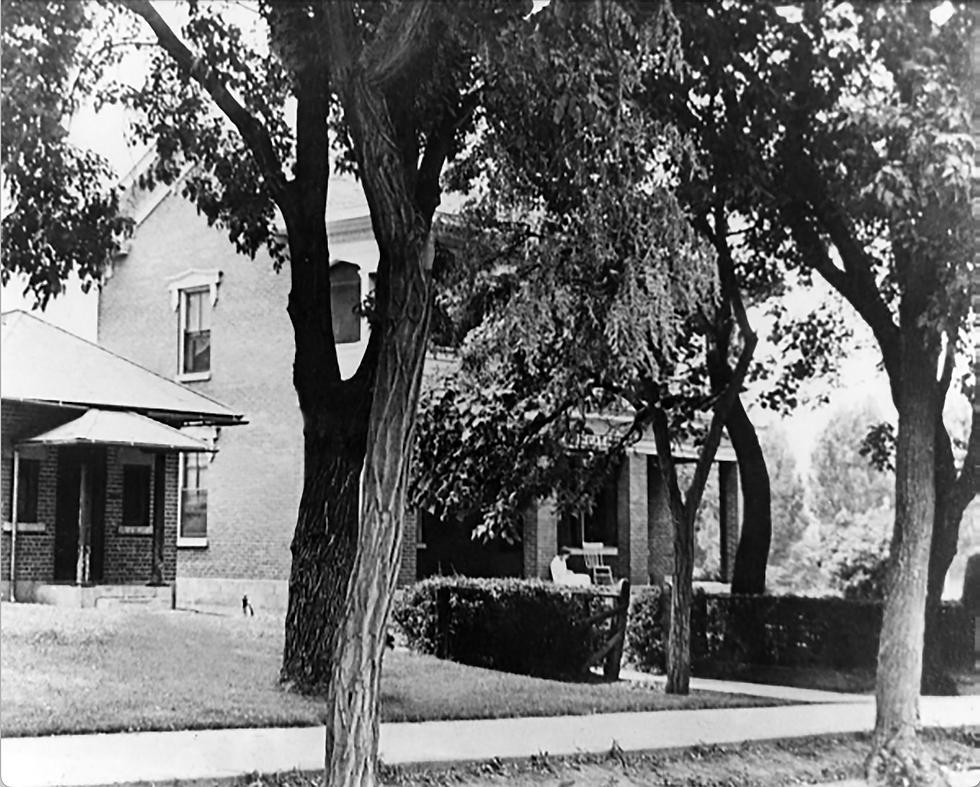
Earlier photo of hospital and offices

7/15/1976 BEJ article of Dr. Pearse and other early providers of medicine in Brigham City by Sarah Yates

Article about the play written about the life of Dr. R. A. Pearse


Comments